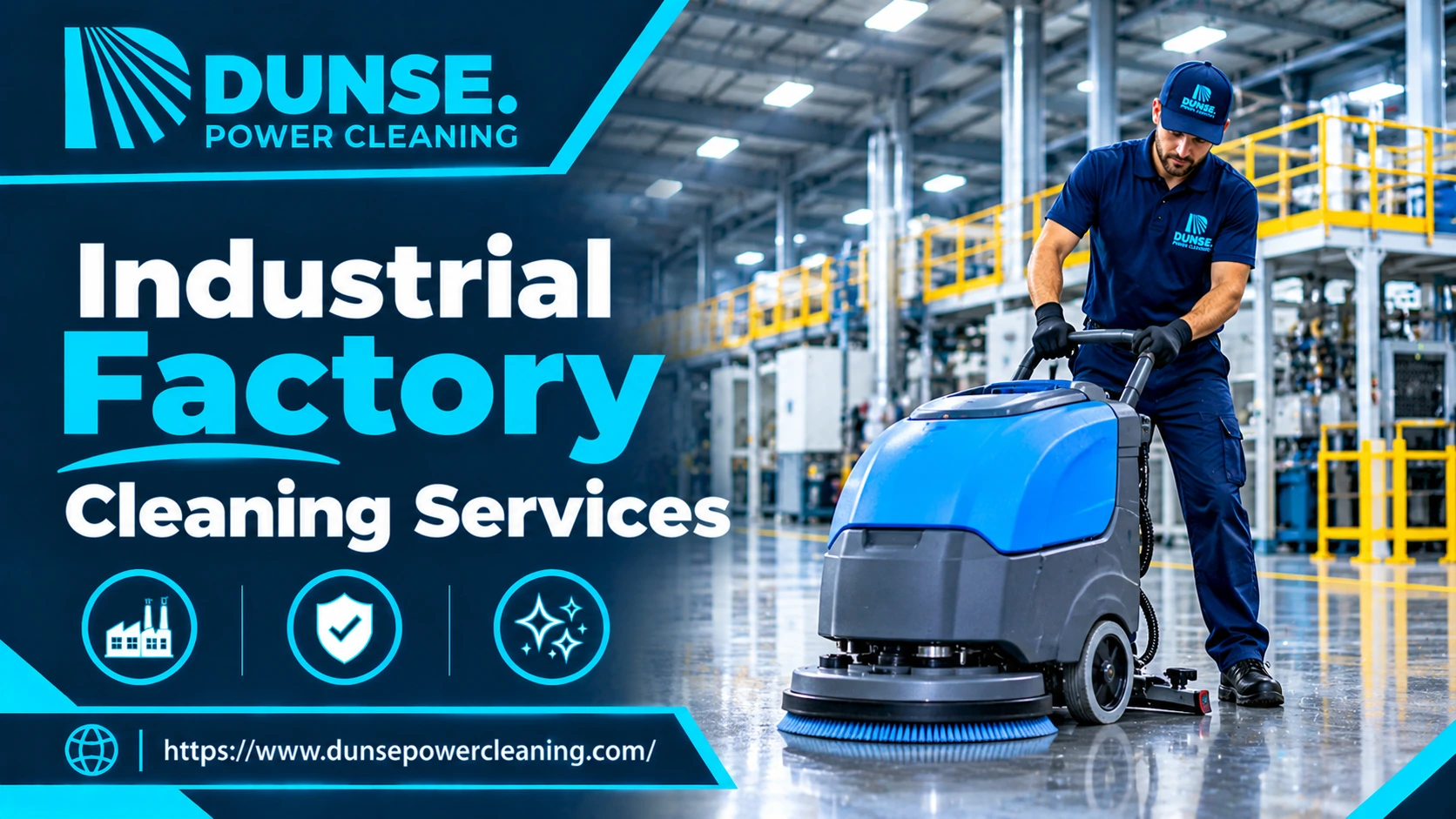
Industrial Factory Cleaning Services| Cut Downtime and Risk
Edinburgh · Industrial Cleaning Guide
A factory runs on uptime. A dirty roof, a blocked gutter or a grease-coated floor quietly costs you money. Here is what industrial cleaning really covers, the safety rules behind it and how to hire a contractor who respects your site.
What this guide covers
- Industrial factory cleaning services: what they actually cover
- Inside or outside the factory: two different jobs
- Machinery and plant: how safe cleaning works
- Industrial roofs and cladding: asbestos and fragile surfaces
- Choosing an industrial cleaning solution that fits your site
- What affects the price?
- How to choose an industrial cleaning contractor
- Industrial cleaning in Edinburgh, Livingston, East Calder and Bathgate
- Why trust Dunse Power Cleaning: our experience
- Frequently Asked Questions
Key Takeaways
- Industrial cleaning splits into inside work (floors, plant, dust) and outside work (roofs, cladding, gutters, yards).
- Most Edinburgh firms advertise interiors only. Exteriors need different skills and safe access at height.
- HSE expects plant to be locked off before cleaning, and chemical risks to be assessed first.
- Older industrial roofs and cladding may contain asbestos cement, so never assume a method is safe.
- Ask for a written specification, risk assessment and method statement before you agree.
Search for a cleaner for your factory and you find a wall of near-identical pages. Most list the same services: floors, dust, degreasing. Few explain the safety rules, the exterior work or what to check before you hire.
This guide covers industrial factory cleaning services from a site manager’s point of view. It explains what the work includes, how safe cleaning around plant works and what to know about asbestos and fragile roofs. If you want a quote for your own site, you can contact our team at any point.
Industrial factory cleaning services: what they actually cover
Industrial factory cleaning services cover the cleaning of factories, warehouses and production sites. Inside, that means floors, machinery, dust and high-level surfaces. Outside, it means roofs, cladding, gutters, yards and loading bays. Contractors plan the work around your production schedule and safety rules.
What does an industrial cleaner do?
An industrial cleaner removes the dirt that builds up in heavy-duty sites: oil, grease, dust, algae, moss and general grime. The tools are bigger than domestic kit, and so are the risks. A good one starts with a site survey, writes a plan and follows your site rules.
Inside or outside the factory: two different jobs
Inside cleaning protects production, hygiene and safety. Outside cleaning protects the building, the roof and your public image. They need different skills, equipment and access, so many firms do one and not the other. Always ask whether a contractor’s industrial factory cleaning services cover the inside, the outside or both.
| Inside the factory | Outside the factory | |
|---|---|---|
| Typical areas | Production floors, machinery, high-level dust | Roof, cladding, gutters, yards, loading bays |
| Main risks | Moving plant, chemicals, slips | Falls from height, fragile roofs, asbestos |
| Key equipment | Scrubber-dryers, industrial vacuums | Access platforms, soft wash systems |
| Common timing | Nights, weekends, shutdowns | Dry spells, planned visits |
Our own work focuses on the outside. See our pages on cladding cleaning, roof cleaning, gutter cleaning and graffiti removal. Our guide to roof cleaning in Edinburgh shows how we approach a roof.
Machinery and plant: how safe cleaning works
Cleaning near machinery is one of the riskiest parts of industrial work. HSE says plant must be securely isolated from power sources before cleaning, and that lock-off with padlocks keeps it that way. Permits to work suit larger plant and any confined space entry.
Industrial plant cleaning services: what to ask about isolation
Before you book industrial plant cleaning services, ask who isolates the machinery and how. HSE explains in its machinery guidance that isolation covers electricity and also hydraulic and pneumatic power. The page covers waste and recycling sites, but the principle applies widely.
- Who locks off the plant, and who holds the keys?
- Is a permit to work needed for this area?
- Are any spaces classed as confined spaces?
- Which chemicals will the contractor bring on site?
On chemicals, HSE states that contractors need to know the risks, and you need to know what hazardous substances they bring. Ask for the safety data sheets before work starts.
Letting a contractor clean running machinery to save time. Switching a machine off is not isolation. Insist on lock-off, whatever the time pressure.
Industrial roofs and cladding: asbestos and fragile surfaces
Older industrial buildings often have asbestos cement roofs, cladding and gutters. HSE lists cleaning weathered asbestos cement roofing or cladding as lower-risk work, but only for people trained to recognise and work safely with asbestos. Never assume a roof is safe to scrape, brush or blast.
Fragility is the second trap. HSE advises treating all roofs as fragile until a competent person confirms otherwise. Roof lights and old sheets can give way without warning, and nobody should walk across them.
Tall frontages need safe access too. HSE says mobile platforms must be properly selected, managed and operated. We offer cherry picker hire for upper levels and large units.
Choosing an industrial cleaning solution that fits your site
The right industrial cleaning solution matches the surface, the dirt and your operations. A contractor surveys the site, plans around production, cleans with a suitable method and checks the result with you. Skipping the survey is where most poor jobs begin.
How a good industrial clean runs
Four stages, from survey to sign-off
Schedule exterior work for a dry spell and interior work for a shutdown. Both save time, and neither disrupts your day-to-day production.
What affects the price?
Size, height, access, dirt level and method set the price. We found no independent UK price guide for industrial cleaning, so treat any number as a guide. For exterior cladding, SPS Exterior Cleaning lists about £2.50 to £8 per square metre, with access adding to the base rate on tall buildings.
Interior pricing depends on the specification: hours, shifts and areas. Compare quotes only when they describe the same work. Always ask for access and waste costs as separate lines.
How to choose an industrial cleaning contractor
When you compare industrial factory cleaning services, choose a contractor who surveys first, writes a specification and can show their risk assessment, method statement and insurance. The British Institute of Cleaning Science offers accredited training and best practice for the cleaning industry, so ask whether staff hold recognised training.
- Do you survey the site before quoting?
- Can I see your risk assessment and method statement?
- How will you identify asbestos or fragile materials?
- Do you hold public liability insurance, and can I see proof?
- How do you handle waste and wash water?
- Can you work out of hours or around shutdowns?
Industrial cleaning in Edinburgh, Livingston, East Calder and Bathgate
Edinburgh’s damp climate and the industrial estates around Livingston, East Calder and Bathgate mean algae, moss and grime build up on roofs and cladding year-round. Our industrial factory cleaning services for exteriors cover the central belt. See our pages for Edinburgh, Livingston, East Calder and Bathgate, or our wider commercial cleaning service.
Why trust Dunse Power Cleaning: our experience
We are a Livingston-based exterior cleaning business. Alasdair and the team clean cladding, roofs, gutters and hard surfaces across Edinburgh, Glasgow and West Lothian. Our commercial page describes tailored cleaning plans for each business, and we are a member of Checkatrade, where you can read verified reviews.
This guide draws on HSE’s machinery, COSHH, asbestos and roof work guidance, BICSc and SPS Exterior Cleaning, all linked so you can check them. We assess your site first and tell you when a job needs a specialist, such as an asbestos survey or a roofer.
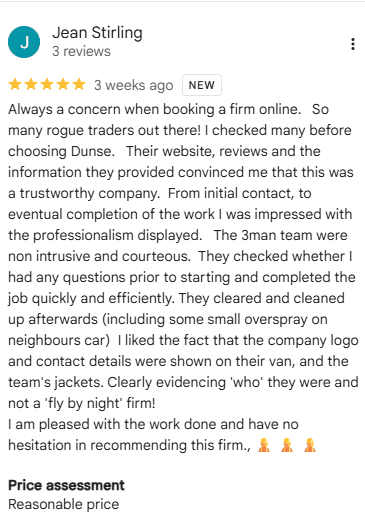
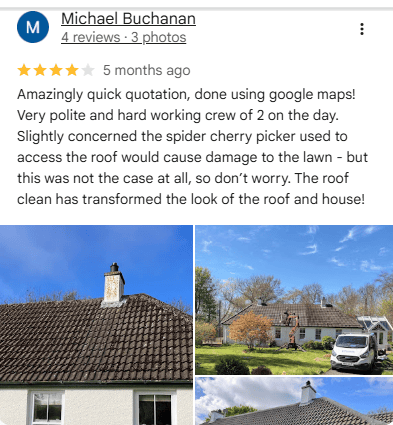
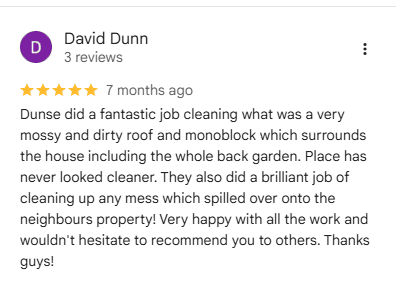
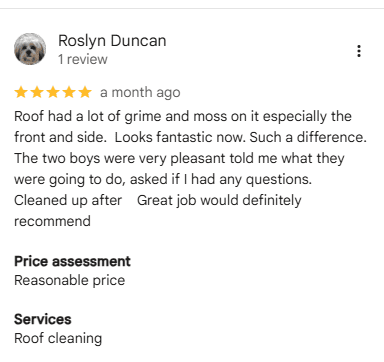
Customer reviews
What our customers say
Frequently Asked Questions
What do industrial factory cleaning services include?
They cover cleaning for factories, warehouses and production sites. Inside, that means floors, machinery degreasing, dust removal and high-level cleaning. Outside, it means roofs, cladding, gutters, yards and loading bays. Scope varies between contractors, so ask for a written specification that names every area, method and product.
Do industrial cleaners clean the outside of factories?
Some do. Most Edinburgh firms focus on interiors, though a few mention jet-washing external cladding. Exterior work needs safe access at height and methods that suit roof and wall materials. At Dunse Power Cleaning, our work focuses on the outside of industrial units, including cladding, roofs, gutters and hard surfaces.
Can you pressure wash an industrial roof?
Not without checking the material first. Many older industrial roofs use asbestos cement sheets, and HSE lists cleaning weathered asbestos cement roofing as work for trained people only. Fragile sheets also cannot bear weight. A competent contractor identifies the roof type before choosing any method.
How often should a factory be cleaned?
Interior cleaning follows production needs, from daily to weekly. Exteriors need less. SPS Exterior Cleaning suggests cladding every 12 to 24 months, with more frequent visits for damp, shaded or busy sites. Agree the schedule in writing, and plan visits around shutdowns to avoid lost production time.
How do I prepare my factory for an industrial cleaner?
Share your site risk assessment and access rules. Agree who isolates machinery and how, since HSE advises locking off plant before cleaning. Clear the working area, note any confined spaces and tell staff when work starts. Ask the contractor for their own risk assessment, method statement and chemical list.
Need your site cleaned without losing production?
Tell us about your premises and we will arrange a free quote. We cover Edinburgh, Livingston, East Calder, Bathgate and the surrounding area.
Get your free industrial cleaning quote →